The short version
- Ten-ounce bars often reduce cost and storage clutter per ounce; one-ounce bars maximize divisibility.
- Brand recognition and authenticity checks matter at either size.
- A mixed stack can use ten-ounce bars for efficient ounces and one-ounce pieces for smaller sales.
Where ten-ounce bars win
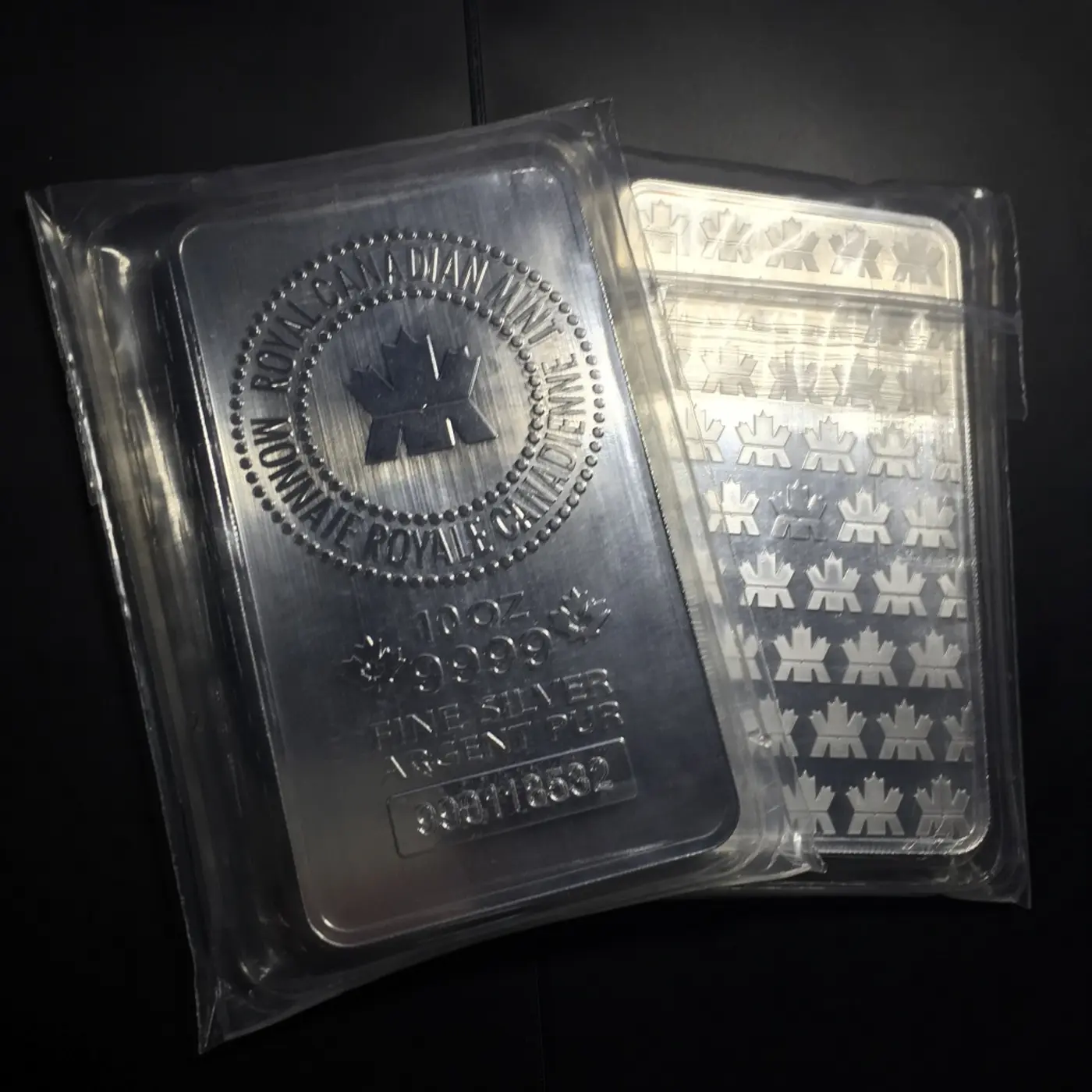
One ten-ounce bar replaces ten individual pieces, capsules, or sleeves. That can make inventory, handling, and compact storage simpler. Because the maker performs fewer individual strikes, packages, and retail transactions per ounce, a plain ten-ounce product may carry a lower premium per ounce than ten matching one-ounce bars.
The tradeoff is concentration. You cannot sell two ounces from a ten-ounce bar. A future buyer must verify and fund the whole piece, and you receive one bid rather than the option to sell smaller units over time.
Where one-ounce bars win
One-ounce bars let a collector add, gift, trade, or sell a small amount without disturbing the rest of the stack. The total ticket is lower, so a new buyer can learn dealer checkout, delivery, and verification with less money committed to one object.
That flexibility normally brings more individual packaging, more items to inventory, and potentially a higher retail premium. A collectible one-ounce design or sealed assay product may also price well above an ordinary bullion bar even though the metal content is the same.
Compare the same quality tier
Do not compare a generic ten-ounce cast bar with a limited one-ounce art bar and conclude that size caused the entire premium difference. Hold maker recognition, production style, condition, packaging, and collectible attributes as constant as possible.
Check dimensions and markings against a documented specification. Ten-ounce bars concentrate more value into each authenticity decision, while one-ounce pieces create more objects to inspect. Neither size removes the need for a reputable seller and consistent records.
- Compare delivered dollars per fine ounce.
- Ask what local or online buyers routinely repurchase.
- Choose storage before the order arrives.
A practical allocation rule
If every likely sale would be small, favor divisible pieces. If the collection is long-term, storage space matters, and a ten-ounce sale would remain manageable, ten-ounce bars can form an efficient core. Many collectors use both instead of forcing one size to perform every job.
Write down the reason for paying any premium: divisibility, presentation, security feature, maker, or collector appeal. If the reason is unclear, compare a simpler bar before buying.
Common questions
Answers without the sales pitch.
Are 10 oz silver bars cheaper per ounce?
They often carry a lower fabrication premium than comparable one-ounce bars, but not always. Maker, finish, scarcity, payment method, shipping, and inventory can outweigh the size difference.
Are 1 oz bars easier to sell?
They allow smaller transactions and may fit more buyers' budgets. Actual ease of sale also depends on recognition, condition, authenticity, quantity, and the buyer's current demand.
Should a beginner buy 1 oz or 10 oz silver?
A small first purchase can reduce the amount committed while you learn pricing and verification. A ten-ounce bar can make sense when its total price, storage, and future sale size are already comfortable.
Primary references
Sources and further reading.
Ouncebound summarizes these sources for general education. Product specifications and market practices can change; verify the exact piece before buying or selling.
The Silver Brief
Keep the framework. Skip the daily noise.
Occasional price context, buying notes, and new archive research—written to be useful, not urgent.